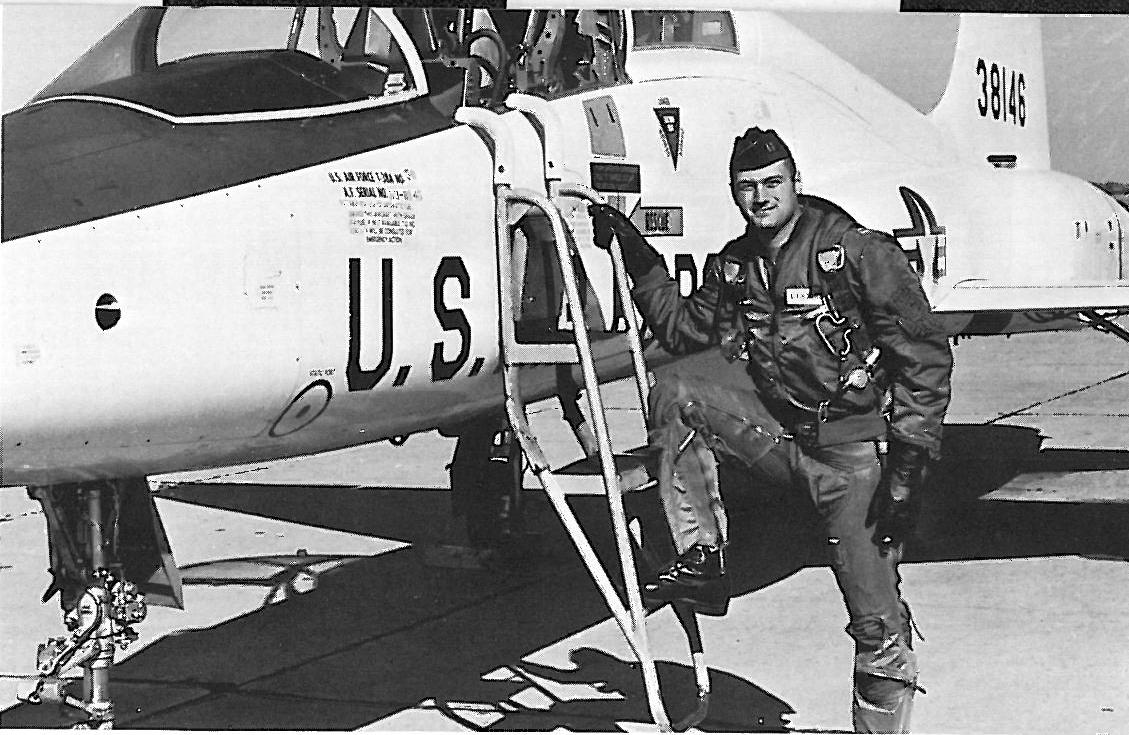
Lindgren, Jr., John O.
Born in Hilo, Hawaii In Hilo, his father owned a drug store, potato chip factory and ran an insurance office. The family moved to Sacramento, California, in 1946, where his father opened an office as a General Insurance agent. His family again moved in 1950 to Spokane, Washington where his father formed a partnership in an insurance agency. John graduated from Lewis and Clark High School in Spokane. While at Lewis and Clark, he received a varsity letter in football and was on the staff of the school paper. He then attended the University of Washington in Seattle for one year while waiting for an appointment to the U.S. Naval Academy. While attending the University of Washington, he became a member of the Sigma Chi Fraternity. In 1958, he received an appointment to the U. S. Naval Academy from the Hon. Walt Horan, Congressman from the 5th District of the State of Washington. He entered the Naval Academy in the summer of 1958 as a member of the Class of 1962. While at the Naval Academy, he participated in intra-mural sports including crew, football and ocean sailing. He graduated 6th of June 1962, and elected to accept a commission as a 2nd Lieutenant in the United States Air Force. Ten days after graduation from the Naval Academy, John married his high school sweetheart, Margie Livengood, in Spokane, Washington. He was selected by the Air Force Institute of Technology to attend graduate school at the University of Southern California, majoring in Engineering. He received a Master of Science degree in 1964 and was assigned to the Air Force Flight Test Center at Edwards Air Force Base, California. Daughter, Heidi Anne was born at Edwards in 1965. In 1967, with the war in Vietnam becoming a major conflict, John applied for Air Force Pilot Training and was assigned to Vance, Air Force Base, Oklahoma, as a member of Undergraduate Pilot Training Class 68E. Son, Lance Eric, was born in Enid, OK, in 1967. John was awarded his silver wings in February 1968. and received a Distinguished Graduate Award after graduating 6th in a class of 62 pilots. Upon graduation from Pilot Training, John was assigned to the 4th Military Airlift Squadron at McChord AFB, WA, as a pilot in the new, four-engined Lockheed C-141A Starlifter. While stationed at McChord, he flew missions all over the world to Alaska, Hawaii, Japan, Taiwan, Hong Kong, Australia, New Zealand, Samoa, Philippines, Vietnam, Thailand, Germany, Turkey, Azores, and England. After only one year as a C-141 pilot, He got orders to attend the Rotary Wing Conversion Course at Sheppard AFB, TX, to become a helicopter pilot. At Sheppard, John flew the UH-1 (Huey) and the H-3 (Jolly Green). After the conversion course, which lasted three months, he was sent to Eglin AFB, FL, for combat crew training in the HH-53C (Super Jolly Green). The HH-53 was a large 42,00 lb rescue helicopter that was equipped with three 30 caliber, 6 barrel, Gatling guns. The aircraft was equipped for aerial refueling from C-130 tankers that could allow it to stay airborne for indefinite periods of time. It carried a crew of two pilots, flight mechanic and two para-rescue medics that also served as gunners. These aircraft were deployed in Southeast Asia for the sole purpose of rescuing downed pilots. They were assigned to two squadrons, the 40th Aerospace Rescue and Recovery Squadron (ARRSq) at Udorn, Royal Thai Air Base in northern Thailand and the 37 ARRSq at Danang Air Base, in northern SouthVietnam. The HH-53’s were the replacements for the HH-3E’s, which were the original Jolly Green Giants.
Originally assigned to the 40th ARRS at Udorn in Feb of 1970, he flew his first combant mission in March. The mission was to rescue the two crew members of a F-4, “Fast FAC” out of the Wolfpack at Ubon Royal Thai Air Base. The aircraft, callsign “Wolf 06” went down in the most heavily defended region of Southeast Asia, the MuGia Pass. Originally flying the backup aircrat, he was called to attempt the pickup of the backseater, Wolf 06 Bravo, when the primary aircraft was badly damaged during the first attempt to rescue the airman. His rescue attempt was hotly contested from the start with numerous 37mm and 23mm antiaircrat guns firing at the rescue force, which included four A-1 “Spads”. One of the A-1’s was badly damaged by the concentrated fire but managed to make it out of the immediate area before bailing out and was picked up by the other backup Jolly Green. Meanwhile, Captain Lindgren’s HH-53 made it to over the survivor and was hit by intense small arms fire, taking over 80 hits from .30 and .51 caliber weapons from what later was determined to be a North Vietnamese Regiment that was in the area. Several of the 12.7mm rounds went through the armor plate and into the left engine, causing it to catch fire and explode. During this confusion, an armor piercing AK-47 round came through the windshield, striking Captain Lindgren in the middle of his armored vest, bouncing off and hittiing him the upper left arm. The crew managed to keep the HH-53 flying on one engine and by ducking into a smoke screen, exit the area under fire. Captain Lindgren was awarded the Purple Heart and Distinguished Flying Cross for this mission. While recovering from his wounds, the squadron, aware of his engineering background, sent him TDY with a maintenance crew to the port of Sattahip, Thailand, to unload three new HH-53’s off a ship, put them back together, check them out and then ferry them over Laos and Cambodia to Danang, Vietnam. These were the first three replacement HH-53’s for the Jolly Green squadron at Danang, the 37th ARRS. At that time, the 37th was equipped with the ollder and smaller HH-3E’s. When the last of the three new HH-53’s was ferried to Danang, Captain Lindgren was transferred to Danang as the squadron only had four HH-53 pilots and three new aircraft. He spent the remaining nine months of his one year SEA tour at Danang where he made 5 more combat saves, including the first HH-53 rescue for the 37th, a RF-4 crew, callsign “Strobe 52”. He is also credited with the last F-105 rescue of the war when he rescued a pilot out of the Ashau Valley, callsign “Dallas 01”, a mission for which he was awarded a second DFC. After SEA, he was transferred to the 41st ARRS at Hamilton AFB, CA, to a new unit comprised of both HC-130’s and HH-53’s. As an instructor/flight examiner, he participated in several high visibility rescues including the crew of a commercial airliner 400 miles out in the Pacific and the crew of a C-7A that lost an engine on a ferry flight from Hawaii. Both missions made headlines in the San Francisco paper. In April, May and June of 1972, he was sent back TDY to SEA as the two squadrons had suffered some losses of instructors (BAT 21) and were desperate to upgrade some new pilots. In April of 1973, he was transferred back to the airlift community to the 75th MAS at Travis AFB, flying the new C-5A. While at Travis, he served as Assistant Operations Officer, Chief of Fight Simulation, Chief of the Travis Command Post, Operations Officer of the 22nd MAS and finally as Chief of Fight Standards at HQ. 22nd Air Force. In 1985, he and his wife of 22 years, Margaret Livengood, were divorced. He retired in June of 1986 after accepting a job offer at McDonnel Douglas in Long Beach, CA. At McDonnell Douglas, he was a senior manager of advanced systems and technology and was in charge of contracts with NASA, Air Force and FAA. In 1987, he married Gale Atwood, a DOD school administrator that he had met in Japan, a couple of years earlier. Gale had come back to the states to get a Masters Degree at the University of California, Irvine and was living with her parents in Laguna Beach. She later became the Dean of Students at both El Toro and Mission Viejo High Schools in Orange County.
After leaving McDonnell Douglas in 1991, he founded his own company, Falcon Aerospace, a consulting firm that specialized in government contracts in the aerospace field. In 1994, he made the jump into the information technology field and was the Federal Programs Manager for Ingram Micro, the world’s largest distributor of computer systems and software. In 2000, John made the big decision to “hang it up” and has been retired ever since. He has served as President of his homeowners association three times and served on the Board of Directors for ten years. He also j0ined the American Legion Post in Newport Beach and served on their board of directors for ten years also. Post 291 in Newport Beach is the largest post West of the Mississippi and is the only post with a 50 slip marina and a Legion Yacht Club. John is a Life Member of the U.S. Naval Academy Alumni Association, the Order of Daedalians, The Military Order of the Purple Heart, the Distinguished Flying Cross Society and the American Legion. He and Gale spend some time traveling, working in the yard and visiting the kids and grand kids, living in Seattle. Son, Lance, is a Lieutenant Commander in the Coast Guard and daughter, Heidi is a senior credit manager for a commercial leasing firm in Seattle. We have had the same house and same phone number for 24 years!
One reply on “Lindgren Jr., John O.”
[…] John Lindgren […]